[Weekly Security News] Zero Trust, the mainstream in cybersecurity- Positive even in court [November 01 2023] 1. Zero Trust security goes mainstream, reveals Okta’s 2023 report Zero Trust has become mainstream according to the latest ‘State of Zero Trust Security’ Report showing an increase in the adoption of security framework in the last two years, […]
No matter what time of day it is, it is an unsettling experience when a stranger unexpectedly comes knocking at your door. And with election day right around the corner, we often see an increase in door-knocking activity in the days leading up to Tuesday’s voting. While most people who knock on your door have […]
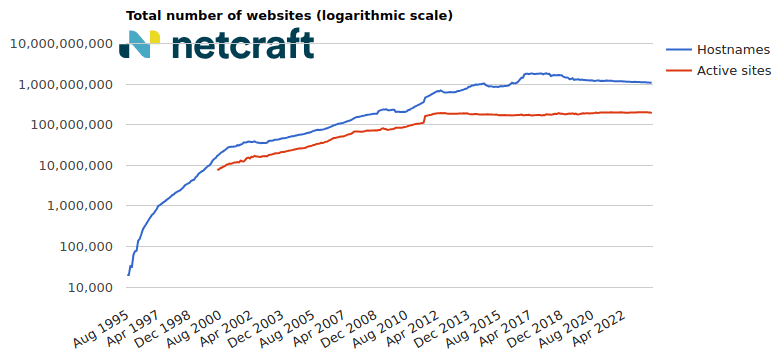
In the October 2023 survey we received responses from 1,093,294,946 sites across 267,962,271 domains and 12,371,536 web-facing computers. This reflects an increase of 8.3 million sites, 13.2 million domains, and 96,682 web-facing computers.
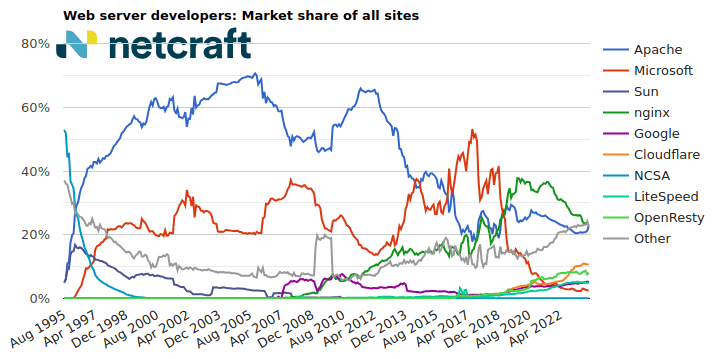
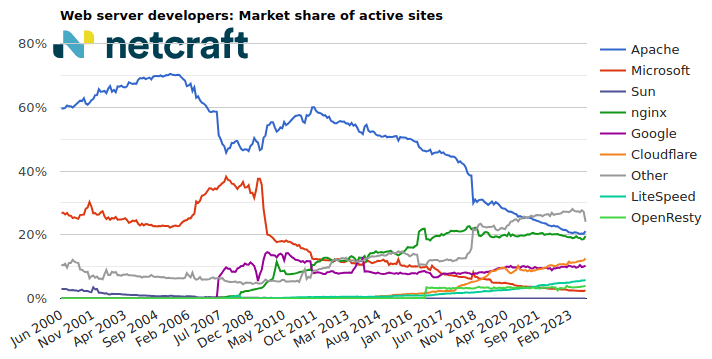
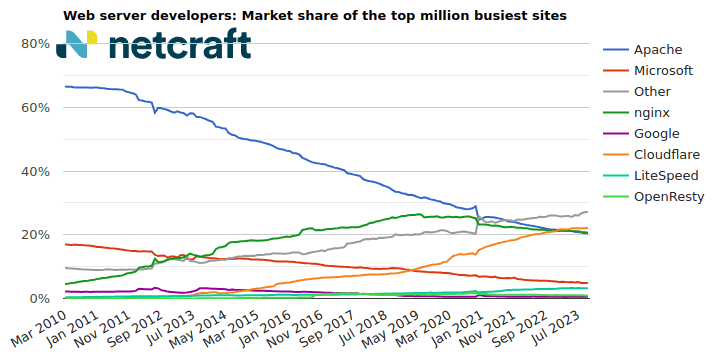
The largest gains this month came from Apache, which gained 19.6 million sites (+8.51%), OpenResty, which gained 5.7 million domains (+14.9%), and nginx, which gained 49,104 web-facing computers (+1.01%).
The largest losses came from LiteSpeed, which lost 1.4 million sites (-2.53%), and Google, which lost 345,532 domains (-9.96%). No major vendor saw losses in web-facing computers this month.
Skyrock.com social network closure
The social network Skyrock.com closed on 21st August. It was rebranded from Skyblog.com in 2007 and became popular in France. The closure caused a loss of 8.2 million active sites this month.
Vendor news
Apache Tomcat versions 8.5.95, 9.0.82, 10.1.15, and 11.0.0-M13 were released this month, fixing regressions in the previous version that broke the Tomcat JBDC connection pool and HTTP compression.
Lighttpd version 1.4.72 was released on October 6th.
Google shared an update on its progress on the already announced new regions in Greece, Mexico, Aotearoa New Zealand, Norway, Saudi Arabia, and Sweden.
AWS announced the general availability of Amazon Bedrock, a managed generative AI service.
It was an honor to moderate the opening session of the Master’s Conference Legal – NY last Wednesday. The expert panel of thought leaders provided terrific insight into what matters most when they select an eDiscovery service provider. A big thank you Denise E. Backhouse of Littler Mendelson, Aulden Burcher-DuPont of Kirkland & Ellis, Michael […]
When it comes to securing your most cherished possessions like valuable jewelry, cash, or important documents within your home, being clever and discreet can make all the difference. Whether you’re hosting a gathering, have a pet sitter in your home, or simply want to protect your valuables in the event of a break-in, these tips […]
Netcraft, the global leader in cybercrime detection, disruption, and takedowns, announced today it has been named the winner of the “Editor’s Choice Cybersecurity Company” award from Cyber Defense Magazine, the industry’s leading electronic information security magazine.
Cybercriminals always seek to cash in on current affairs to lend credibility to their attacks, and the conflict in Gaza is no exception. Netcraft has detected over $1.6M in cryptocurrency being transferred to accounts associated with this fraud.
In donation fraud, cybercriminals trick users into donating to what appears to be a legitimate cause using numerous tactics. This includes referencing current events, encouraging readers to act urgently, and by using emotive language (or situations). The criminal’s goal is to pressure the victim into acting impulsively and sending funds without due diligence.
This blog post takes a detailed look at how opportunistic cybercriminals have made use of the conflict to carry out donation fraud within days of its start. In nearly all cases we have seen, these campaigns solicit “donations” via cryptocurrency. Many even go one step further and drain the entire crypto wallet of their victims through the use of crypto drainers.
The criminal exploitation of the situation is turbulent, with campaigns starting and stopping and site contents changing constantly. Some sites have had their fraudulent content completely replaced less than a week after they were initially observed by Netcraft.
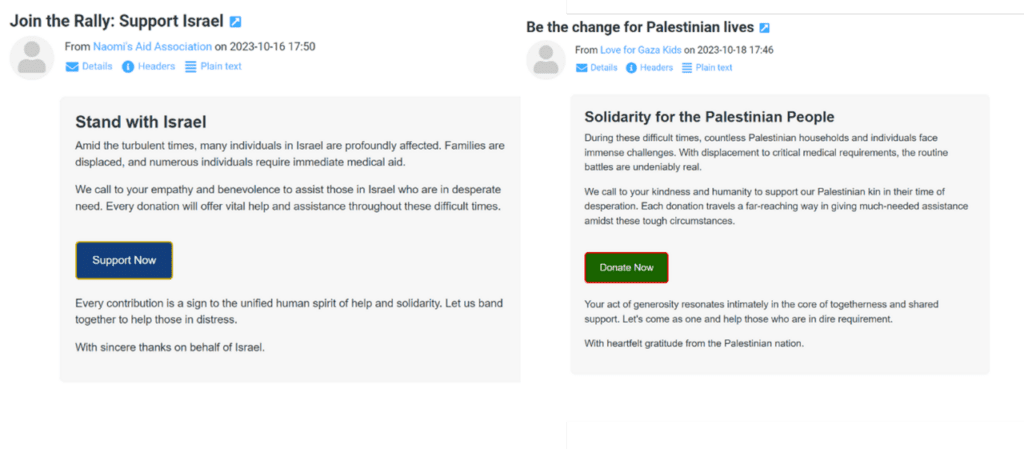
Two Donation Fraud emails taking advantage of the conflict, soliciting donations for Israel and Palestine respectively. Both destination sites send funds to the same cryptocurrency wallet, suggesting indiscriminate targeting by the threat actor.
Rise of the crypto drainers
Opportunistic donation fraud often requests “donations” to be made in cryptocurrency. At the start of the Ukraine war, several large-scale email campaigns impersonated targets such as President of Ukraine Volodymyr Zelenskyy, the British Red Cross, and the UK Prime Minister’s Office. Regardless of the impersonated party, the emails asked for donations to be made to one or more cryptocurrency addresses listed directly in the text. This form of donation fraud relies on …
We’re pleased to be able to post this interview that the New York City-based writer Daniel Falcone conducted with JWE board member Richard Falk on October 18 Israel has long …
[Weekly Security News] Cybersecurity Month but cyberattacks continue [October 25 2023] 1. October is Cybersecurity Month: Practice These Tech Safety Tips The aim of Cybersecurity month is to raise awareness about digital security and empower everyone to protect their personal data. Check 10 tech safety tips you can implement. Source : Cal OES News […]
The United Nations designated 31 October as World Cities Day. Observing this annual day aims to create awareness of the role of urbanisation in global sustainable development and social inclusion.